

Garden decoration ideas work best when they make a space feel intentional, not crowded. I like outdoor decorating most when the yard still feels like a yard, but the edges, surfaces, and sightlines all feel considered. A good garden does not need a lot of objects. It needs the right ones in the right places.
If you want a quick place to compare styles and see how different outdoor pieces work together, start with the garden decoration category on Household Products Map. Then come back and build your own version with the space you already have.
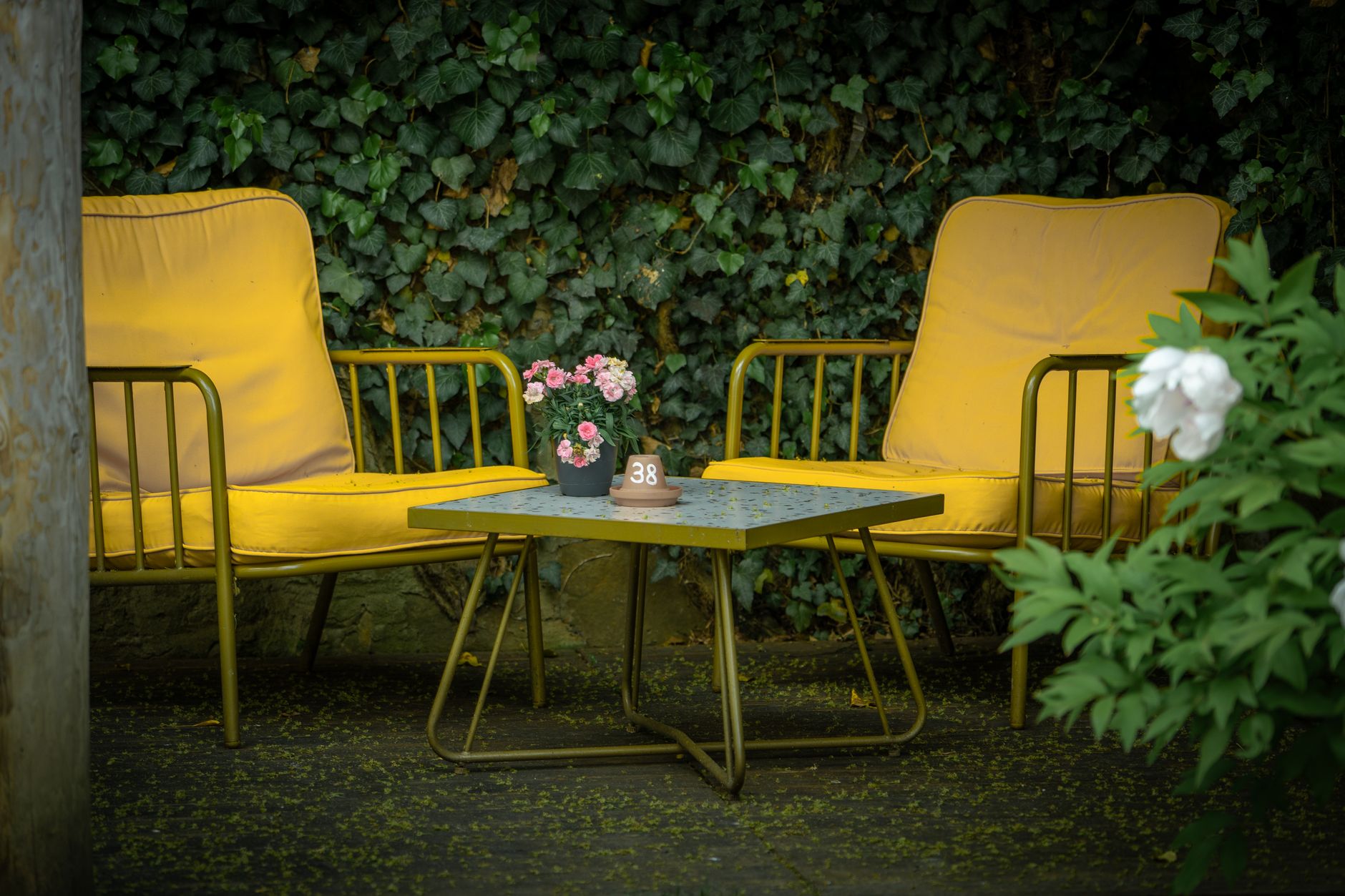
The trick is to decorate with a plan. That does not mean a strict design rule or a formal layout drawn on graph paper. It means deciding what you want the space to do before you buy a single planter, lantern, bench, or statue. Do you want the garden to feel welcoming at dusk, lively on weekends, private from the street, or simply more finished when you glance at it from the kitchen window? Each of those goals points to a different set of choices.
When people feel stuck, they usually do one of two things. They either buy too many small objects and end up with visual noise, or they buy one large statement piece and let the rest of the garden drift. Better results usually come from layering a few clear elements. Think of the space in terms of structure, height, texture, and repetition. If those four ideas are working together, the garden will feel decorated even if the actual number of items is modest.
In the sections below, I will walk through practical ways to shape that feeling. The focus is on choices that hold up over time, work in different climates, and are easy to adjust as the seasons change. The best part is that most of these ideas do not require a renovation. They just require a sharper eye and a little restraint.
Garden decoration ideas for a layout that feels calm
The fastest way to make a garden feel more polished is to give it a simple visual order. I start by looking at the space the same way I would look at a living room. Where does the eye land first? Where does it travel next? Where does it stop? If a yard has no clear answer to those questions, every decoration works harder than it should.
A calm layout usually has three parts. First is the anchor, which might be a bench, a dining table, a tree, or a large planter cluster. Second is the path or edge line, which guides movement and separates zones. Third is the soft layer, which comes from plants, containers, or low objects that fill in the gaps without blocking the view. When those pieces are present, the garden feels designed instead of improvised.
I find it helpful to step back and identify the strongest line in the garden. Sometimes it is a fence. Sometimes it is a wall. Sometimes it is the curve of a path. Once you know that line, place the most important decoration near it, not against random open ground. A lantern on a path edge reads differently from the same lantern floating in the middle of a bed. A bench under a tree feels deliberate. The same bench in an empty corner can look forgotten.
Spacing matters as much as the objects themselves. Leave air around features so the eye can rest. If you place three items, let them breathe as a group. If you create a vignette, let it be a real vignette, not a shelf of unrelated objects. The goal is not symmetry for its own sake. The goal is a rhythm the eye can follow without effort.
One simple exercise helps a lot. Stand at the main viewing point, usually the door, patio, or kitchen window, and ask what needs to be removed before anything else is added. People often keep old pots, cracked ornaments, and leftover planters in visible spots because they feel harmless. They are not harmless. They distract from every better choice you make later. Edit first, decorate second.

Once the layout is clear, decoration becomes easier. You are no longer trying to decorate every corner. You are choosing which parts deserve attention and which parts should stay quiet. That difference is what makes a garden look calm.
Choose a color story and materials that age well
Color is where many outdoor spaces drift off course. People pick pieces one at a time, usually on sale, and the garden slowly turns into a collection of unrelated decisions. A better approach is to choose a small color story and let that guide the rest. For most gardens, three tones are enough: a base color, a plant color, and a metal or accent color. Anything beyond that should feel like an intentional accent, not another theme competing for attention.
Earthy schemes work well because they sit naturally in the landscape. Terracotta, cream, stone, charcoal, olive, brass, and weathered wood all feel comfortable outside. If your home exterior is already bold, a quieter garden palette usually helps. If the house is neutral, a stronger accent color can bring the whole view to life. The point is not to avoid color. The point is to make the color feel related.
Materials deserve the same attention. A matte ceramic planter, a galvanized steel tub, and a woven chair do not communicate the same thing. That is useful when you want contrast, but it can also make the yard feel busy. I like to repeat materials in at least two places so the garden feels coherent. A brass lantern near the steps and another beside a bench create a subtle connection. A woven basket of cushions next to a woven tray on a table gives the eye a reason to keep moving.
Durability matters too. Outdoor decor should handle moisture, sun, and dust without falling apart after one season. Choose finishes that can weather a little. Wood can age well if it is sealed or naturally suited to outdoor use. Metal can look better as it develops a patina, as long as the finish is meant for it. Ceramic should be sturdy enough for temperature changes. Fabric should be removable, washable, and easy to store.
A useful rule is to mix one refined material with one natural material. For example, smooth clay plus rough gravel. Powder-coated metal plus leafy green planting. Linen cushions plus timber decking. That combination keeps the garden from feeling too formal or too rustic. It also gives you enough texture that you do not need many accessories to make the space feel interesting.
When in doubt, step down before you step up. If a color feels too loud in the store, it will probably look louder outside under direct light. If a finish looks glossy indoors, it may read even shinier in the sun. Outdoor spaces usually reward understatement more than drama. The objects should age with the garden, not fight it.
Use planters to create rhythm and height
Planters are one of the easiest ways to make garden decoration ideas feel real instead of theoretical. They give you instant structure, and they let you move the structure around without changing the landscape. That flexibility is valuable. A planter can frame an entrance, fill a blank wall, soften a corner, or mark the edge of a sitting area. It is one of the few outdoor pieces that can be both practical and decorative at the same time.
The easiest mistake is using planters that are all the same size. Matching pots can look clean, but they can also flatten the space if nothing else is changing in the scene. I prefer a group with variation. One tall pot, one medium pot, one low pot. The heights create a simple visual climb. The repeated material or color keeps the group from feeling random.
Think in layers. A tall planter can hold a more upright plant or a small tree form. A medium container can carry the mid-level structure. A low bowl or trough can soften the base. When those layers sit together, the arrangement feels fuller without becoming crowded. You do not need every pot to shout. You need them to support one another.
Placement changes everything. Two identical planters placed directly beside a door can feel formal and expected. The same pair staggered along a path can create motion. A single oversized planter can anchor a corner, but only if it is given room. If you jam a large container between other objects, it loses its presence and makes the space feel cramped. Leave a little empty space beside it so the shape can register.
Plant choice matters just as much as container choice. Some plants bring architecture. Others bring softness. I like to pair one of each. For example, a narrow upright plant with trailing greenery. A small tree with low, rounded foliage. A tuft of ornamental grass with broad-leafed seasonal planting. Those pairings stop the display from looking like a row of identical green blobs.
There is also a maintenance advantage. A well-chosen planter group can be refreshed seasonally without rebuilding the whole yard. Swap the plant mix, keep the containers, and the garden still feels new. That is much easier than chasing a completely different look every few months. The best container displays are adaptable, not precious.

If you only change one thing this month, change the planter heights. The garden will look more composed almost immediately.
Let lighting do the quiet work after sunset
Lighting is often treated like a technical afterthought, but in a garden it can be the most decorative element of all. During the day, plants and materials do most of the visual work. After sunset, lighting decides whether the space feels welcoming, flat, or strangely unfinished. A few well-placed lights can turn a simple yard into a place people want to stay in a little longer.
I like to think in layers again. The first layer is functional light, the kind that helps people walk safely along steps, paths, and seating areas. The second layer is mood light, which adds warmth without glare. The third layer is accent light, which highlights a tree, a wall, a trellis, or a piece of decor. When all three are working together, the garden feels alive at night instead of merely visible.
String lights work best when they have a clear purpose. Draped randomly, they can look like a quick fix. Strung along a defined line, they feel deliberate. Try hanging them from a pergola, fence, or simple post arrangement. Lanterns are another good tool because they are mobile. You can move them from a table to a step to a path edge, depending on the event or the season.
Solar lights are useful, but they look better when they are not the only layer. A row of small solar stakes across a path can help guide movement, yet the garden will still need one or two warmer, more human sources of light if you want the scene to feel inviting. The easiest way to avoid a harsh look is to choose warm white rather than cool white. Cooler light can make plants look flat and outdoor furniture look harder than it really is.
Reflective surfaces can help too. A pale wall, a glazed pot, or a shallow water feature can bounce light and make a small space feel larger. You do not need a dramatic effect. Even a little reflection can make the whole garden read as more intentional. The goal is to let the light discover the space, not flood it.
When you install lighting, check it at night from the same places people actually stand. A light that looks perfect from above may look awkward from a chair. A bulb that feels soft in a catalog may feel too bright once the sun sets. Test the view from the door, the path, and the table. Outdoor decorating should work in real life, not just in photos.

Night is where many gardens either come together or fall apart. Good lighting quietly solves that problem.
Choose furniture that anchors the scene
Furniture in a garden should do more than provide a place to sit. It should help define the space. A bench, bistro set, lounge chair, or compact table can make a wide outdoor area feel organized and usable. Without that anchor, the garden may look nice in a broad sense, but it can feel like a pass-through rather than a destination.
The most useful furniture pieces are usually the ones that carry a double purpose. A bench can create seating and also act as a visual boundary. A small table can support drinks or tools, but it also gives the eye a horizontal pause. A storage ottoman can hold cushions and still make a seating area feel complete. When a piece has both visual and practical value, it earns its place.
Scale is where many people go wrong. In a big garden, tiny furniture disappears. In a small courtyard, oversized furniture swallows the usable space. Measure the footprint before you buy, but also imagine the circulation around it. You should be able to move comfortably without the furniture forcing a narrow path. If people keep turning sideways to pass through, the arrangement is too tight.
Material choice shapes the mood. Wood feels warmer. Metal feels crisper. Wicker or woven textures feel softer and more relaxed. Stone or concrete feels grounded and stable. There is no single correct answer, but there should be some relation between the furniture and the rest of the garden. A rustic table beside sleek planters can work if the contrast is intentional. The same combination can look confused if it happens by accident.
I also like one piece to act as a visual anchor, even if the rest stays light. That anchor might be a sturdy bench under a tree, a dining table centered under a canopy, or a pair of lounge chairs facing a view. Once the anchor is in place, you can decorate around it with cushions, side tables, or a throw. Those smaller pieces feel more useful when the main composition already has a center.
Keep comfort in the picture. Garden decor should invite people to linger. If cushions slide off, tables wobble, or chairs sit awkwardly on uneven ground, the space will look better than it feels. A polished garden that no one wants to use is not really finished. The best decorated spaces are the ones people naturally occupy.
Add focal points and vertical interest
Every garden needs at least one moment that makes people slow down. That is the focal point. It could be a sculpture, a birdbath, a mirror, a trellis, a potted tree, or even a striking chair placed in an otherwise quiet spot. Without a focal point, the eye wanders. With too many focal points, the eye gets tired. The sweet spot is one clear highlight, supported by quieter details around it.
Vertical interest matters because most gardens spread outward more than upward. Plants naturally fill the ground plane, and that is good, but if everything sits at the same height, the view can feel flat. A trellis, arch, climbing vine, tall planter, or wall-mounted basket gives the scene a little lift. It also helps you use the full volume of the garden instead of only the ground floor.
I like vertical pieces that also serve a functional role. A trellis can support climbers and create privacy. A wall shelf can hold small pots and tools. A tall obelisk can guide a vine upward and become a sculptural form at the same time. The more use a decorative object has, the less likely it is to feel like clutter later.
Mirrors can work in enclosed gardens if they are used carefully. They can widen a narrow space and reflect light into darker corners. The trick is to place them where they bounce greenery or sky, not where they just reflect a blank wall or a busy storage corner. The same is true for sculpture. A good sculpture should give the eye a place to pause, not compete with every plant nearby.
Height variation can also come from the planting itself. Try one upright element, one rounded element, and one trailing element. Even in a simple bed, that combination makes the composition feel deliberate. If everything spreads low, the border looks unfinished. If everything shoots upward, the bed can feel stiff. A mix of forms keeps the garden visually balanced.

When I am editing a garden, I ask one question. What is the one thing I want people to remember from this angle? If I cannot answer quickly, the garden probably needs a clearer focal point.
Rotate seasonal accents without losing consistency
Seasonal decorating is where a garden can feel fresh without becoming chaotic. The mistake is to treat each season like a full reset. That leads to storage piles, too many themed objects, and a space that feels like it is always starting over. A smarter approach is to keep the base composition steady and change only a few accent pieces.
Think of the garden as a long-term stage set. The structure stays in place. The lighting stays in place. The main furniture stays in place. Then the accents shift with the weather and the mood of the season. In spring, that might mean lighter planters and brighter flowers. In summer, more shade, water, and relaxed seating. In autumn, richer color and textured materials. In winter, simpler silhouettes, lanterns, evergreen shapes, and fewer visual distractions.
The best seasonal changes are subtle enough that they feel like part of the same garden. I like repeating one constant element, such as terracotta, black metal, cream, or weathered wood, across every season. Then I swap the supporting colors around it. This keeps the garden from looking like four different people decorated it in four different months.
Nature already gives you a strong seasonal framework. You do not need to fight it. Let the plants carry some of the change and let decor respond to that change instead of overpowering it. If the garden has a lot of green in summer, the accents can stay simple. If the garden goes bare in winter, a few strong shapes and warm lights do more work than a dozen small objects ever could.
Containers make seasonal updates especially easy. You can change the planting without changing the container set. Cushions and throws can shift color while the furniture remains the same. A table centerpiece can become heavier or lighter depending on the time of year. Even one wreath, basket, or bowl arrangement can mark the season without turning the space into a holiday display.
The question I ask myself is not what can I add. It is what can I swap without disturbing the whole composition. That small shift changes the way seasonal decorating feels. It becomes an edit, not a takeover. The garden keeps its identity while still acknowledging the time of year.
Garden decoration ideas for small spaces and tight corners
Small gardens are often easier to decorate well than large ones because every object matters. There is less room for filler, which means each choice has to earn its place. The challenge is that small spaces can also look crowded very quickly. That is why the best small-space decorations tend to be simple, multi-purpose, and slightly elevated off the ground.
When a space is compact, I look for vertical surfaces first. Fences, walls, railings, and narrow corners offer more opportunity than the center of the yard. Hanging planters, wall shelves, slim trellises, and foldable seating can all add style without swallowing circulation space. A small bench with storage is often more useful than a decorative object with no job to do.
Repeat is powerful in tight spaces. One planter alone can feel lost. Three of the same planter, arranged with variation in height, can create a real moment. The same idea applies to lighting and small accessories. Instead of many different pieces, choose one or two forms and repeat them. That repetition makes the space look calmer and larger.
Reflective and light-colored surfaces help too. A pale table, a light gravel path, or a pale wall can make the area feel less compressed. Dark objects are not wrong, but too many dark objects in a small garden can absorb visual space and make the area feel tighter. Use darker tones as accents, not the whole story.
In a small space, negative space is decoration. That line matters. If every inch is filled, the garden feels noisy no matter how beautiful the individual pieces are. Leave some open ground, some empty wall, or some breathing room around a chair. That emptiness gives the eye somewhere to land and makes the decorated parts feel more meaningful.

I also like to use one strong focal point in a small garden rather than several weak ones. A single lantern cluster, a narrow water bowl, or one striking chair can do more than a shelf full of tiny extras. Small spaces reward confidence. Pick fewer things, place them better, and let the empty space do its job.
Keep the garden looking intentional through simple maintenance
A decorated garden only stays attractive if someone keeps an eye on the details. Maintenance is part of decoration, even if people rarely talk about it that way. A planter full of healthy growth looks like design. The same planter full of dried stems and spilled soil looks like neglect. A clean lantern looks inviting. A dusty one looks forgotten. The difference is not usually money. It is upkeep.
I keep the maintenance routine simple on purpose. The more complicated the system, the less likely it is to survive a busy month. One quick weekly walk-through is enough for most gardens. I check for broken pots, leaning plants, tangled cords, dusty surfaces, and dead leaves. I also look for items that drifted out of place. Sometimes a chair slides. Sometimes a lantern gets bumped. Sometimes a cluster of pots spreads out and loses its shape. A short reset keeps the whole scene tidy.
Cleaning should match the materials. Wipe metal before it dulls. Brush off cushions before dirt settles in. Hose down paths before moss and dust build up. Turn planters if one side is fading faster than the other. These are small tasks, but they keep the design from slowly slipping into the background.
Seasonal storage matters too. Not every object needs to live outside year round. If a piece does not like rain, frost, or long sun exposure, rotate it indoors when the weather changes. Store items in labeled bins if you can. That makes the next refresh easier and saves time later. A good system reduces the feeling that outdoor decor is fragile or high maintenance.
Plants are part of the same picture. Trim what is overpowering the layout. Replace anything that has clearly stopped doing its job. Watering schedules, sunlight needs, and container health all affect the look of the garden. There is no clean decorative arrangement sitting on top of failing planting. The two are connected.
Maintenance also includes restraint. Every time you are tempted to add one more ornament, ask whether the garden already has enough personality. Sometimes the better move is to remove one item rather than add another. The finished look is usually protected by editing, not accumulation.
Common mistakes and a quick finishing checklist
Most garden decoration problems are easy to spot once you know what to look for. The first mistake is overbuying. A yard filled with random objects can feel busy in a way that never settles. The second is ignoring scale. A tiny decoration lost in a wide bed does nothing, and an oversized piece in a narrow passage blocks movement. The third is mixing too many finishes, colors, and themes without a clear reason.
Another common issue is decorating only the visible center of the garden and forgetting the edges. Corners, boundaries, and transition points are where a space usually feels either finished or unfinished. A path with no edge treatment looks temporary. A fence with nothing around it can make the garden feel cut off. Even a simple pot, light, or wall feature can help those areas feel included.
People also tend to decorate in ways that only work from one angle. That can be fine if the space has a single main view, but most gardens are seen from more than one place. Check the view from inside the house, from the gate, from the seating area, and from the path. If the layout only makes sense from one point, it needs another round of editing.
Here is the checklist I use before I consider an outdoor space finished:
- There is one clear anchor point that draws the eye.
- The colors repeat across at least two different objects.
- Planters vary in height, not just in quantity.
- Lighting works both for safety and atmosphere.
- Furniture fits the scale of the space and leaves room to move.
- There is at least one vertical element to lift the view.
- Seasonal items can be swapped without changing the whole setup.
- The edges and corners feel included, not forgotten.
- Nothing broken, faded, or dusty is fighting for attention.
If a garden passes that list, it usually feels finished even if it is still simple. That is the point. Good garden decoration ideas do not rely on excess. They rely on good judgment, steady repetition, and a willingness to edit until the space finally feels like itself.
When I look at the best outdoor spaces, they never seem overloaded. They seem settled. That is the feeling worth aiming for, because once a garden feels settled, it becomes easier to enjoy, easier to maintain, and easier to change with the seasons without losing its character.